Funded by: 
This research is currently supported by Biotechnology Risk Assesement Grant (BRAG) competitive grant No. 2020-33522-32315 from the USDA National Institute of Food and Agriculture.
How do Colorado potato beetles become resistant to RNAi?
Current insecticidal gene silencing technologies are based on activation of the RNA interference (RNAi) pathway through ingestion of double stranded RNA (dsRNA) molecules targeting a vital host gene. The insecticidal activity resides in the lack of expression of the target gene. Both transgenic and non-transformative delivery of dsRNA are considered for development of commercialized RNAi pest control products, which will provide a novel and one of the most specific modes of action known to date. Despite the high interest in RNAi-based insecticidal products, information on resistance to RNAi is scarce, especially for non-transgenic dsRNA delivery methods. Our current collaborative project with colleagues Drs. Scott Lenaghan, Scott Ermich and Kurt Lamour at the University of Tennesese aims at adressing this current knowledge gap by identifying the mechanism and genes responsible for resistance to dsRNA.
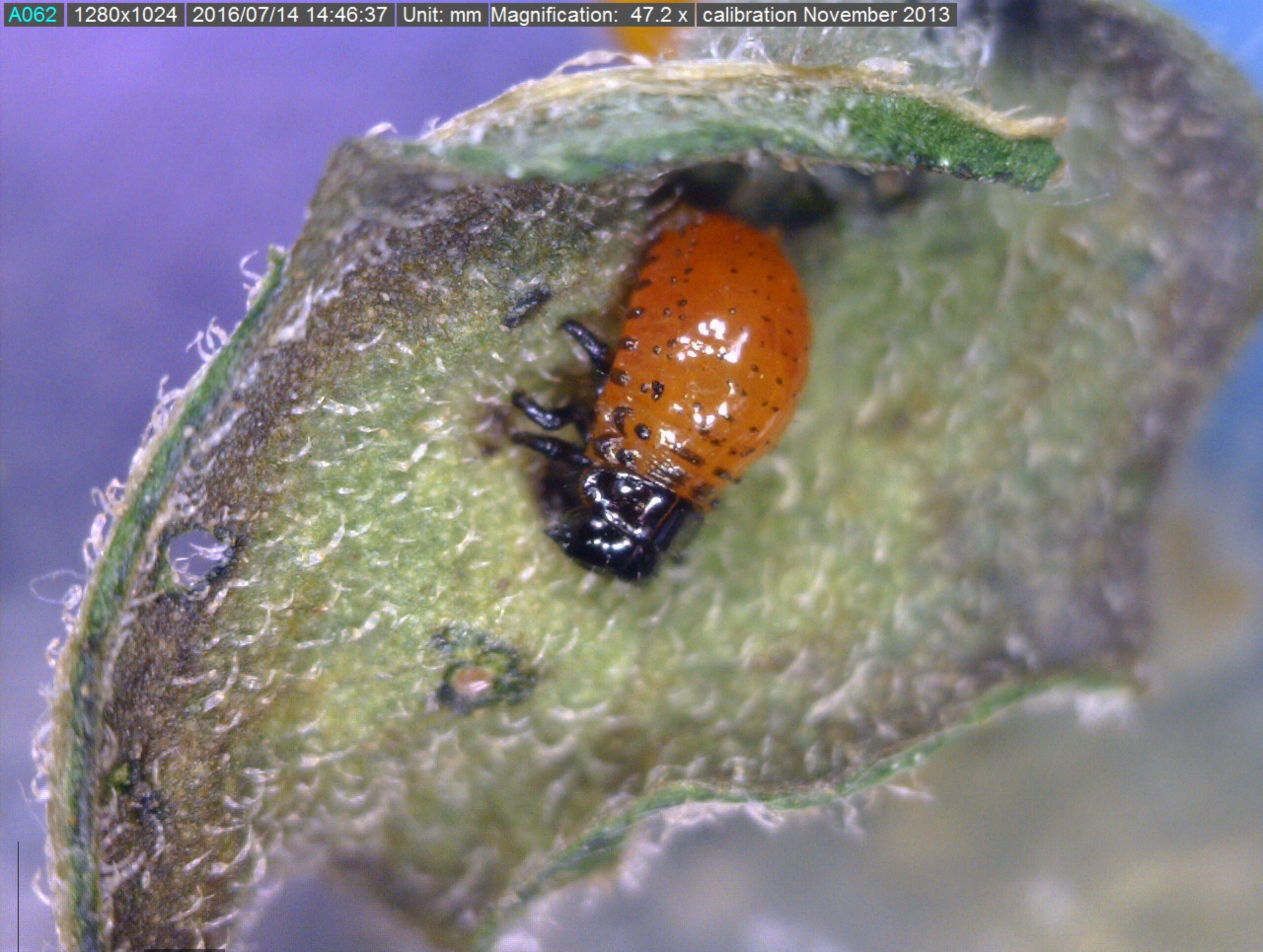
Our work focuses on resistance to dsRNA for control of Colorado potato beetle (Leptinotarsa decemlineata) and capitalizes on succesful selection of a strain of this pest that is >11,000-fold resistant to dsRNA targeting the V-ATPase subunit A transcript. This strain also displays cross-resistance to alternative dsRNA targets.
Current research goals focus on assessing and comparing the risk of resistance to insecticidal dsRNA when delivered through a transgenic (transplastomic potato) versus non-transformative (topical spray) method. Our research plan includes determining the genetics and mechanisms of resistance to dsRNA to develop improved RNAi-based pesticidal technologies. We are also testing for potential fitness costs as well as cross-resistance to other pesticides in dsRNA-resistant beetles as important information for resistance management.
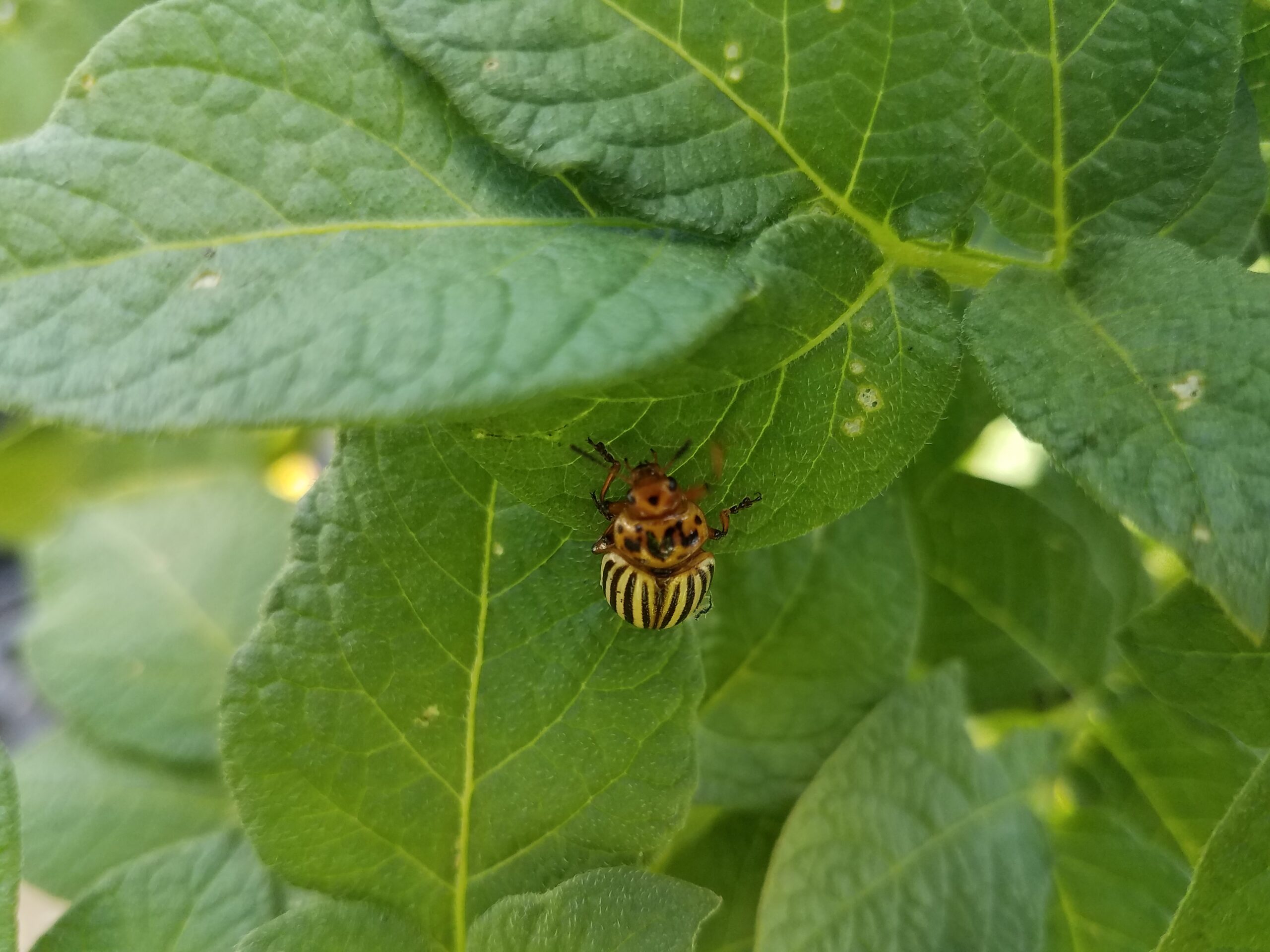
Colorado potato beetle adult feeding on potato
Publications from this area of research
Mishra, S., Dee, J., Moar, W., Dufner-Beattie, J., Baum, J., Dias, N.P., Alyokhin, A., Buzza, A., Rondon, S.I., Clough, M., Menasha, S., Groves, R., Clements, J., Ostlie, K., Felton, G., Waters, T., Snyder, W.E., Jurat-Fuentes J.L. (2021) “Selection for high levels of resistance to double-stranded RNA (dsRNA) in Colorado potato beetle (Leptinotarsa decemlineata Say) using non-transgenic foliar delivery” Sci. Rep. 11(1):6523. PDF
Dias, N. P., Cagliari, D., Dos Santos, E. A., Smagghe, G., Jurat-Fuentes, J. L., Mishra, S., Nava, D. E., and M. J. Zotti (2019) “Insecticidal gene silencing by RNAi in the Neotropical region” Neotrop. Entomol. PDF